
The Wisdom of Lifelong Learning
There are times in our lives when we all wish we had paid a little more attention at school. I know I should have!
If not for a fortunate chain of events that set me on a path of lifelong learning, I doubt I would be where I am today. Looking back, I wonder how many of those seemingly fortunate events were, in fact, quiet moments of God’s providence.
With this in mind, I find myself drawn to the words of the Book of Ecclesiasticus/Sirach (6:32-33)
If you are willing, my son, you will be taught.
And if you apply yourself, you will become clever.
If you love to listen, you will gain knowledge.
If you incline your ear, you will become wise.
What strikes me about these words is the emphasis placed not on intelligence or academic ability, but on a willingness to learn.
Perhaps something significant is that God gave us two eyes to observe, two ears to listen, but only one mouth to speak.
How often, though, do we reverse that balance? We become so eager to express our own opinions that we fail to observe what is happening around us or truly listen to what others have to say. Sometimes, we’re so busy preparing our response that we fail to hear what is being said.
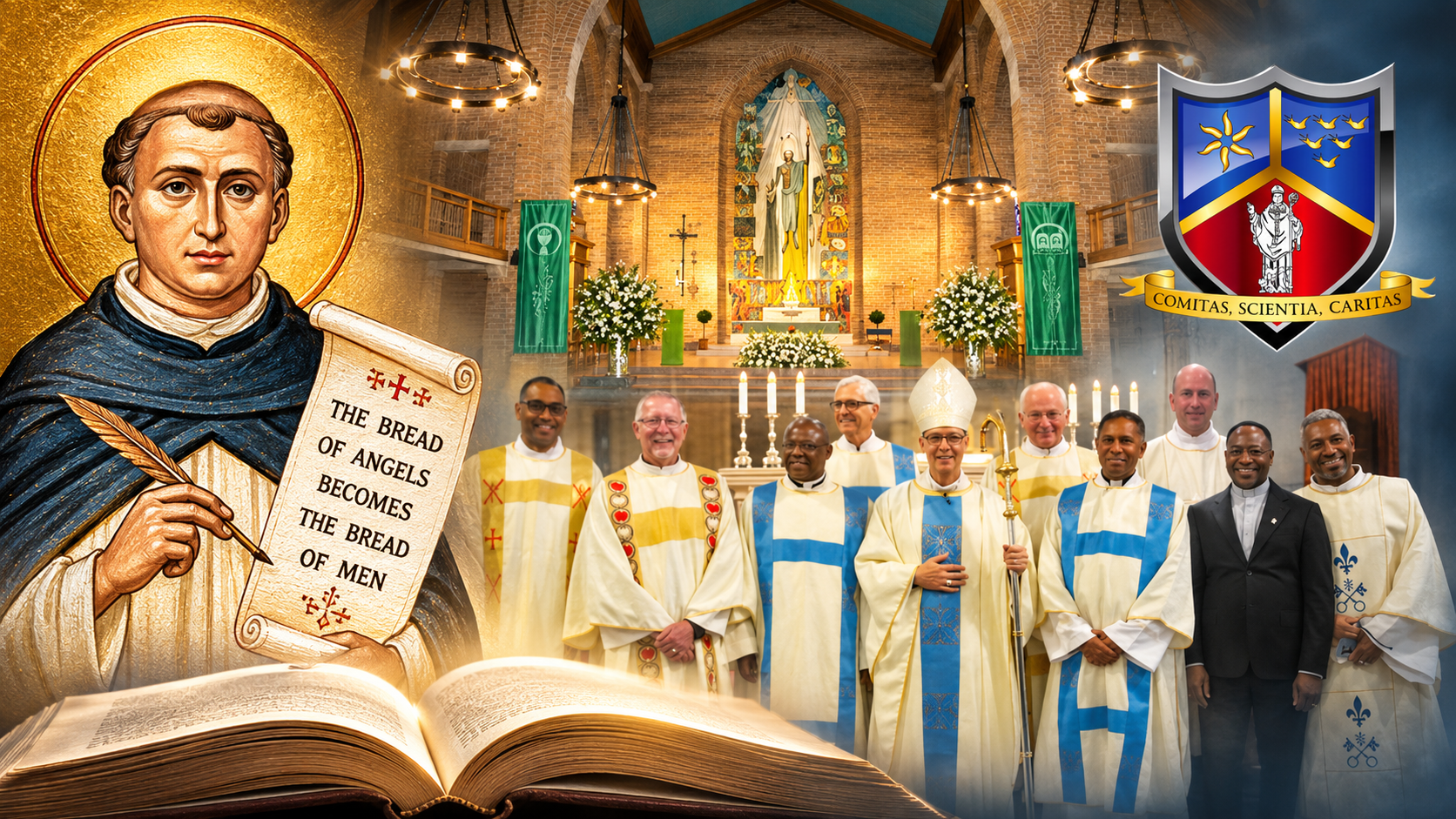
St. Thomas Aquinas understood the importance of being willing to learn from others. In his Summa Theologiae, he speaks of docilitas, or docility, as an essential part of prudence. It is the humility to recognise that we do not know everything and that others have something to teach us.
Perhaps this is one of the greatest challenges of growing older. As our knowledge and experience increase, so too can the temptation to believe that we have less to learn. Yet genuine wisdom might be found in precisely the opposite attitude.
Of course, knowledge and wisdom are distinct. Knowledge can be acquired through reading, studying and experience, but wisdom is something deeper. It shapes the decisions we make, the relationships we share and, ultimately, our relationship with God.
As Christians, we are called to remain lifelong disciples. Remember, the word disciple means not only a follower but also a student.
For many, the journey of discovery which led them to the Catholic Church began with an RCIA programme (Rite of Christian Initiation of Adults). Yet completing that programme, as our parish priest has reminded me, should never be seen as a graduation from religious education. Rather, it provides a foundation for a lifetime of spiritual growth.
Our formation doesn’t end with leaving school, gaining a qualification, completing RCIA, receiving the sacraments or even being ordained. Indeed, the deeper we grow in our faith, the more we begin to appreciate the richness of what remains to be discovered.
Some of life’s greatest lessons come not from books or lecture theatres, but from the people God places in our path. The elderly, the young, the vulnerable, those who challenge us and even those with whom we disagree.
But we must have the humility to listen.
Sometimes, the most valuable lessons are learnt not through speaking, but through remaining silent long enough to hear what others, and indeed God, are trying to teach us.
For the Christian, lifelong learning is more than an intellectual pursuit; it is part of our spiritual formation, an ongoing journey of discovery and conversion towards the fullness of truth, which we find in Christ.
The pursuit of knowledge may enrich the mind, but the pursuit of wisdom can transform the soul. And perhaps that journey begins with something as simple as learning to observe more, listen more and speak a little less.
We are never too old to be students, never too experienced to be taught, and never too knowledgeable to sit humbly at Christ’s feet.