
What Are We Afraid Of?

Earlier this week, I received a reminder about a Christian men’s breakfast I’ve been attending. Although I’ve encouraged a number of men who I’ve come into contact with, it made me stop and think about why so few of them want to attend.
I’m sure it’s not about breakfast itself, because there’s always something reassuring about the promise of a full English breakfast and coffee, or the fact that it is early on a Saturday morning, but about the ecumenical nature of those attending, and why it is that some Christians can feel slightly nervous when they hear that word.
Perhaps our hesitation about ecumenism is not really a fear of the other Christian, but a fear of stepping into the unknown. In the past, I have worked in the community as a clinician, so I recognise that entering the unknown is hard. We know what lies on our side of the door, comfortable with our traditions, our language and our familiar ways of worship. But what happens when we cross that threshold and sit down beside someone whose Christian journey has been different from ours? And perhaps, if we are honest, there can be a deeper fear: What if I discover that I have more in common with another Christian than I expected?
For Catholics, there can sometimes be a particular concern. We rightly treasure the fullness of the Catholic faith. We don’t want ecumenism to become an exercise in pretending that our differences don’t matter. But Scripture gives us a very different understanding of Christian unity.
Jesus himself prayed for it at the Last Supper, teaching, “That they may all be one… so that the world may believe that you have sent me.” (John 17:21) These words are remarkable because Christian unity isn’t simply an idea invented by theologians or something we do because it seems polite. Jesus himself prayed that we would be one.
But this isn’t the whole story; notice what Jesus says just a few verses earlier: “Sanctify them in the truth; your word is truth.” (John 17:17) Jesus doesn’t ask us to abandon truth in order to achieve unity. Nor does Christian unity mean that we have to pretend that Catholics, Anglicans, Methodists, Baptists and other Christians believe exactly the same things.
For too long we have seen that unity and truth can’t be spoken of in the same breath; the challenge of ecumenism is to hold them together. Therefore, whilst seeking genuine unity, we shouldn’t do so by ignoring our differences, but by facing them honestly as we walk together towards Christ.
Perhaps one reason ecumenical encounters make us uncomfortable is that we have become too accustomed to thinking in terms of them and us. We know who we are. We know what we believe. We know where the boundaries are.
But when someone from another Christian tradition comes along and sits beside us, the boundaries suddenly become personal. This is exactly what happens to Peter in Acts 10. Peter grew up with a clear understanding of what was clean and unclean. Then God gives him a vision saying: “What God has made clean, do not call common.” (Acts 10:15)
Peter is then invited into the home of Cornelius, a Gentile. This is not simply a theological discussion. Peter has to cross a physical and cultural boundary and enter the home of someone he would previously have regarded as outside his religious world.
And what happens? Peter discovers that God is already at work there. He says: “Truly I understand that God shows no partiality.” (Acts 10:34) Peter doesn’t become less faithful by meeting Cornelius. He doesn’t abandon his identity. Instead, his encounter with another person allows him to see more clearly what God is doing.
Perhaps that’s worth remembering when we receive an invitation to an ecumenical event. We don’t have to leave our Catholic faith at the door. In fact, we must arrive as Catholics. But we arrive not to defend a position, but to share the richness of what we have received, to listen to what others have received, and to discover together how our common faith in Christ can become a lived reality of unity, charity and service.
We can bring our convictions, our traditions, our Scriptures, our experience and our love for Christ. But we can also arrive with humility, recognising that the Holy Spirit is not confined to the people who look, worship or speak exactly like us.
Paul gives us a simple principle: “Therefore welcome one another as Christ has welcomed you, for the glory of God” (Romans 15:7)
This is a challenging instruction. It doesn’t say, welcome people only after they agree with you. It says to welcome them as Christ welcomed you. And perhaps this is where ecumenism becomes less frightening. We begin not with the question, “How different are they from me?” but with the question, “What does Christ see in this person sitting across the table?”
That doesn’t mean that we have to believe another Christian’s theology is better than our own. It means we approach another person without arrogance, willing to listen, willing to learn, and willing to recognise the dignity of someone who is also seeking to follow Christ. And perhaps that is what the men’s ecumenical breakfast offers.
It’s not a negotiation or a theological battlefield. It’s not an invitation to water down what we believe. It’s simply an opportunity to sit around a table with other men who, in their own way, are trying to live as followers of Jesus Christ.
Traditionally, we thank Luke for guidance on how we should approach our conversations: when he described in Acts (2:46-47) how we might meet together, share meals, and worship God with joyful and generous hearts. How we might care for one another and, day by day, encourage more people to come to faith.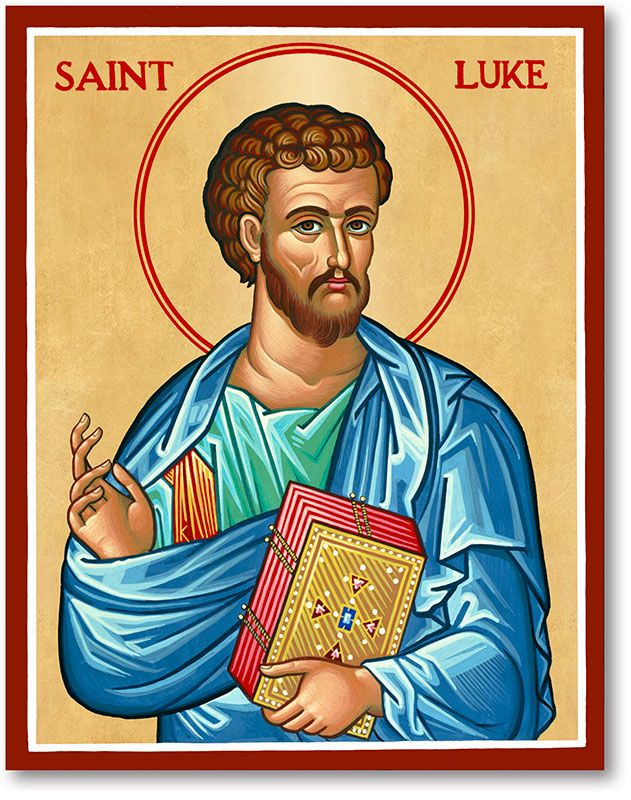
Of course we’re going to discover differences. But perhaps we’ll also discover stories of faith, struggles with prayer, concerns about our families, experiences of failure and hope, and a desire to become better Christian’s. And perhaps we’ll discover that the person sitting next to us isn’t really “them” at all. They’re a brother or sister in Christ. As Paul reminds us: “There is one body and one Spirit… one Lord, one faith, one baptism.” (Ephesians 4:4–5)
We still have work to do for the full visible unity of Christians. Our differences are real, and they matter. But so too is the baptism we share and, above all, the Lord whom we seek to follow.
So perhaps the next time we receive a reminder about an ecumenical breakfast, we should ask a different question. Not, “What am I going to be confronted with?” But: “What might God be asking me to discover?”
Peter entered Cornelius’ house and discovered that God had gone before him. Perhaps we can do the same. We don’t need to be afraid of one another. We simply need to keep our eyes on Christ, and trust that when Christians meet with humility, charity and truth, Christ is already there.